Surrey Jamia Mosque

Funeral Services

Redhill Mosque Funeral Services

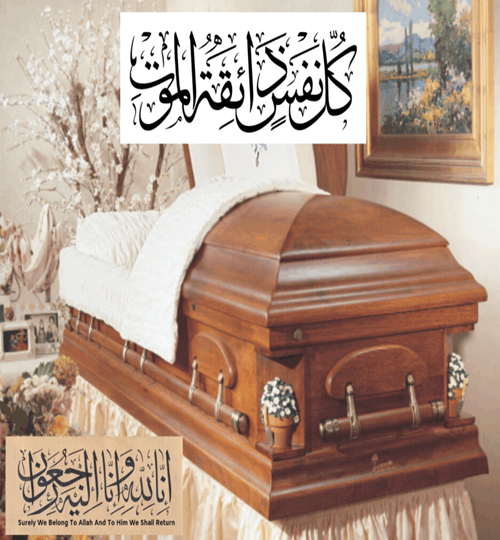
كُلُّ نَفْسٍ ذَائِقَةُ الْمَوْتِ ۖ ثُمَّ إِلَيْنَا تُرْجَعُونَ

We have carried out funeral services for our Muslim community since 1973. We provide a caring and compassionate service that treats the deceased with the utmost respect. Muslim law and tradition have endowed a Muslim’s funeral with profound religious significance, we aim to uphold this significance with dignity, sanctity and modesty.

Sharee’ah has also prohibited the delaying of the burial on account of a certain relative being overseas and this person’s inability to arrive quickly, for example, due to an unavailability of a flight

Community & Social Services

Quran e Kareem (29 : 57)

Every soul will taste death. Then to Us you will be returned.

If the death occurs in a hospital, the hospital will provide a Medical Certificate showing the cause of death or will refer to a coroner if the cause of death is uncertain or questioned. The body is kept in the hospital mortuary until the executor arranges for the body to be taken away.

2 2 1.png

If the Death Occurs in a Hospital

Positioning the Body: If possible, the body should be turned onto its right side facing the Qibla (Mecca).

2 2 1.png

If the Death occurs at home

Gently Close the Eyes, Bind the Jaw, Straighten the Limbs, Cover the Body, Contact a Doctor, Notify a Mosque.

2 2 1.png

Registrar a Death

Many registrars offer an out-of-hours service for religious communities that require rapid burial.

2 2 1.png

A Certificate for Burial

Green Form (Burial Order). This is the legal document the funeral director needs to take the body from the hospital mortuary.

2 2 1.png

Preparing for Burial

Ghusl (Washing), Kafan (Shrouding), Janazah (Prayer), Procession, Tadfeen (Burial),

2 2 1.png

A Note on Mourning

The official mourning period (Hidaad) is three days, during which the family receives visitors and condolences.

Redhill Jamia Mosque: Bereavement & Burial Support

Get Started

Your best route is to contact the management office directly. They oversee the ritual washing (Ghusl), funeral prayers (Janazah).

Community-Focused

Funeral Care At Jamia Masjid Al-Mustafa

To reach the funeral team at Redhill Jamia Mosque Al-Mustafa, your best route is to contact the management office directly. They oversee the ritual washing (Ghusl), funeral prayers (Janazah), and coordinate with the local council for burial plots.

Sajid Latif

Head Imam

Abdul Haq

Board of trustees

Amir Pasha

Board of trustees

M G Khan

Board of trustees

What to do after a death in England and Wales.

Muslims funeral
Muslims Funeral Services

Please contact M Tariq Mob no:07852268014
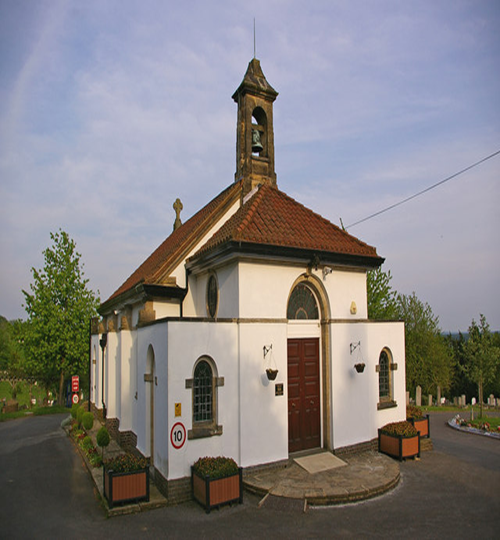
Redstone Cemetery
Redstone Cemetery

Please contact on :01737 276000
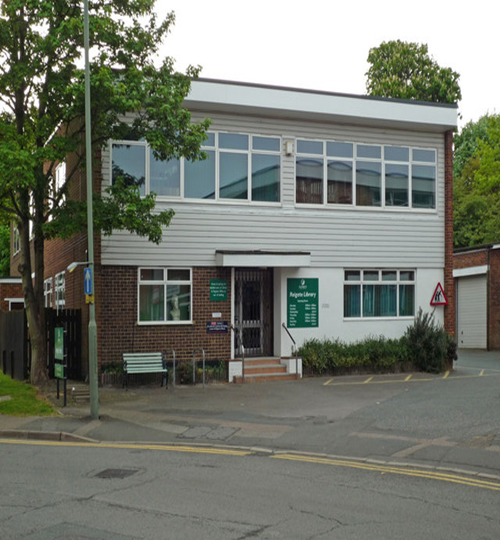
Bancroft House

Reigate Registration Office

Please contact on : 0300 200 1002

3 3.png

In a case of an emergency, Please contact:
Head Imam | Mian Sajid Latif Qadri M: 0728783600
E: info@surreymosque.com If we miss your call, please leave a message, and we will get back to you as soon as possible (In-shaa-Allaah).

5

FAQs

Funeral Guide

Our funeral guide includes notes and information regarding what to consider when an individual has passed away.

Death is a very painful and emotional time which for many serves as a testing time. However with The correct attitude it can act as a means of hope and mercy. Muslims believe that death is the end of the life of this world, yet the beginning of the next. In essence the true life is yet to come as it is eternal. It is at this very moment that Muslims pray for Gods mercy to be with the departed, in hope that they may find peace and happiness in the life to come.

When a Muslim is near death, those around him/her are called upon to give comfort, and reminders of Gods mercy and forgiveness. They may recite verses of the Quran, give physical comfort, and encourage the dying one to recite words of remembrance and prayer. It is recommended, if at all possible, for a Muslim’s last words to be the declaration of faith: “ I bear Witness that there is no God but Allah and Muhammad is his messenger.” (However it should be noted that this be done in a very soft manner without enforcing the declaration as it is possible that due to extreme discomfort, pain and disillusion from Satan that the dying individual responds harshly against advice.)

Upon death, those with the deceased are encouraged to remain calm, pray for the departed, and most importantly begin preparations for the burial of the body. The eyes of the deceased should be closed, and the body covered temporarily with a clean sheet. It is forbidden for those in mourning to excessively wail, scream, or thrash about. “Those who tear their clothes and beat their chests (in mourning) are not from us. “Grief is normal when one has lost a loved one, and it is natural and permitted to cry. When the Prophet Muhammad’s (pbuh) own son died, he said: “The eyes shed tears and the heart is grieved, but we will not say anything except which pleases our Lord. ” One should strive to be patient, and remember that Allah (SWT) is the one who gives life and takes it away, at a time appointed by Him. It is not for us to question His wisdom.

Muslims strive to bury the deceased as soon as possible after death, avoiding the need for embalming or otherwise disturbing the body of the deceased. An autopsy may be performed, if necessary (in accordance to the law of the land), but should be done with the utmost respect for the dead.

In preparation for the burial, the family or other members of the community will wash and shroud the body. The deceased will be washed respectfully, with clean and scented water, in a manner similar to how Muslims wash in the ritual bath. The body will then be wrapped in sheets of clean, white cloth (called a Kafan). Three sheets are used for men and five sheets for women.

The Deceased is then transported to the site of the funeral prayers (Salat-l-Janazah). These prayers are commonly held outdoors, in a courtyard, public square or if need be inside the mosque. The community gathers, and the Imam (prayer leader) stands in front of the deceased, facing away from the worshippers. The funeral prayer is similar in structure to the five daily prayers, with a few variations e.g. there is no bowing or prostrations

The deceased is then taken to the cemetery for the burial. While the members of the community attend the funeral prayers, only the men of the community accompany the body to the gravesite. It is preferred for a Muslim to be buried where he or she died, and not be transported to another location or country (Which may cause delays or embalming the body). If available, a cemetery (or section of one) set aside for Muslims is preferred. The deceased is laid in the grave (without a coffin if permitted by local law) on his /her right side, facing Mecca. At the gravesite, it is discouraged for people to erect tombstones, elaborate markers, or put flowers or other mementos. Rather, one should humbly remember Allah and His Mercy, and pray for the deceased.

Loved ones and relatives are to observe a 3- day Mourning period. Mourning is observed in Islam by increased devotion, receiving visitors and condolences. Widows observe and extended mourning period (Iddah), 4 months and 10 days long, in accordance with the Quran 2:234. During this time, she is not to remarry, move from her home, or wear decorative clothing or jewellery, It is equally important to note that cultural customs should be avoided in the burial rites e.g. Feeding on the 40th day, as only those acts of worship carried out on the behalf of the deceased my benefit him/her that are in accordance with the Quran and Sunnah.

When one dies, everything in this earthly Life is left behind, and there are no more opportunities to perform acts of righteousness not even single litanies. The Holy Prophet Muhammad (P.B.U.H) once said that there are three things however, which may continue to benefit a person after death: Charity given during life which continues to help others, Knowledge for which people continue to benefit, and a righteous child who prays for the deceased.

Just Type1.png

For Muslim Community of Surrey

Designed to be an informative communications tool for the Mosque. Download our new Mobile App for free, available on App Store & Google Play.

Available for Android and IOS.